

Veterans Mental Health
Mental health and suicide prevention training
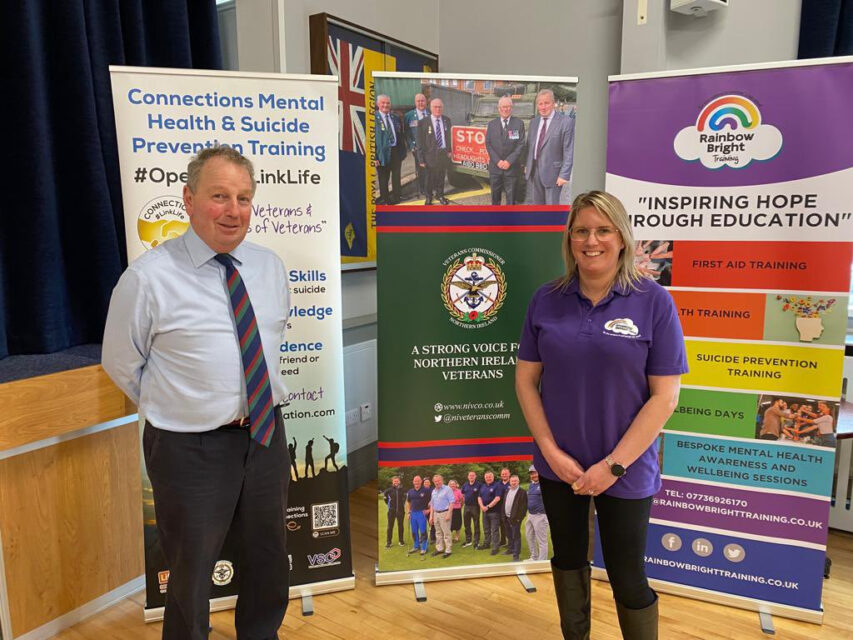
Danny Kinahan, Veterans Commissioner with Alison Campbell, course trainer
The Commissioner’s Office, in conjunction with Rainbow Bright Training, is currently facilitating a number of mental health and suicide awareness training sessions to members of Royal British Legion branches, Ulster Defence Regiment and Royal Irish Associations.
Many veterans experience poor mental health and reaching out can be difficult because, despite many advances, there is still a stigma attached to the whole area of mental health.
Here in Northern Ireland we have our own bespoke circumstances where many veterans are reliving their lived trauma as they still live in their conflict zone. Research conducted in Northern Ireland by the Mental Health Foundation in 2016 show’s poor mental health is 25% more prevalent than that of England by comparison. What is also interesting to note, further research by the Mental Health Foundation found that young veterans are at a higher risk of suicide in the first 2 years after they leave service.
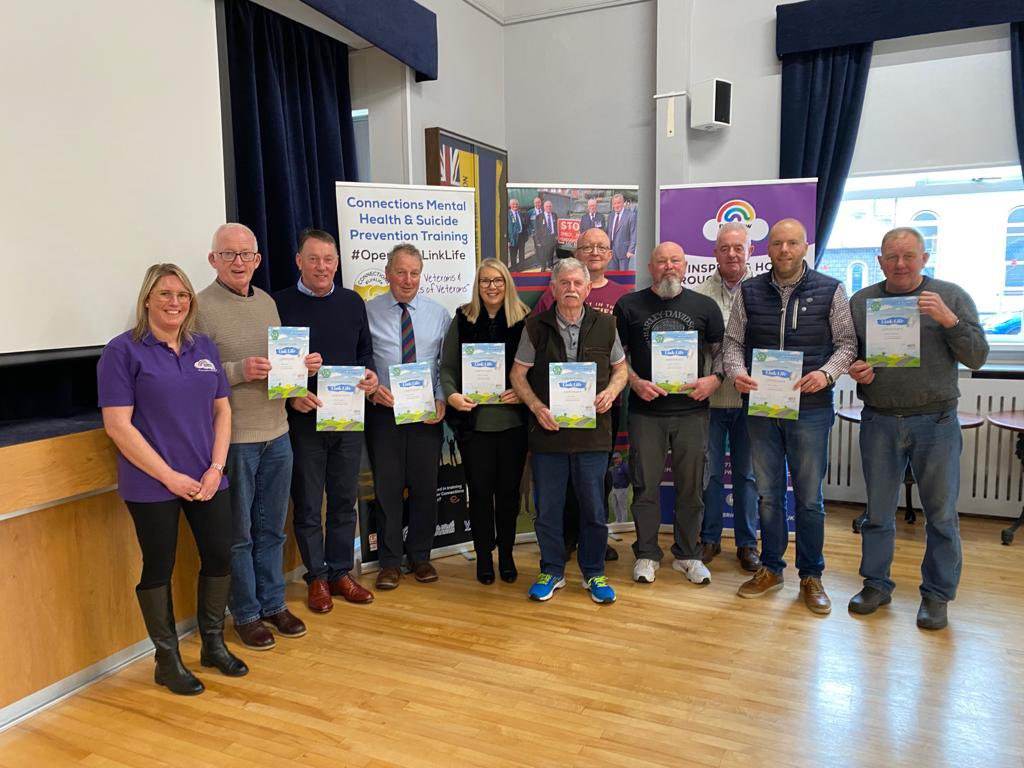
In this course, participants will learn the following:
– The factors that contribute to poor mental health, emotional distress, and suicide.
– The relevance of mental health and emotions to the prevention of suicide.
– A Mental Health First Responder Connect 4-Ways Model.
– Tools and resources for support.
– How to fortify life through self-care.
It is intended that this training programme will support us in our goal to reduce isolation and improve mental health outcomes for veterans and families of veterans through best practice in this field.
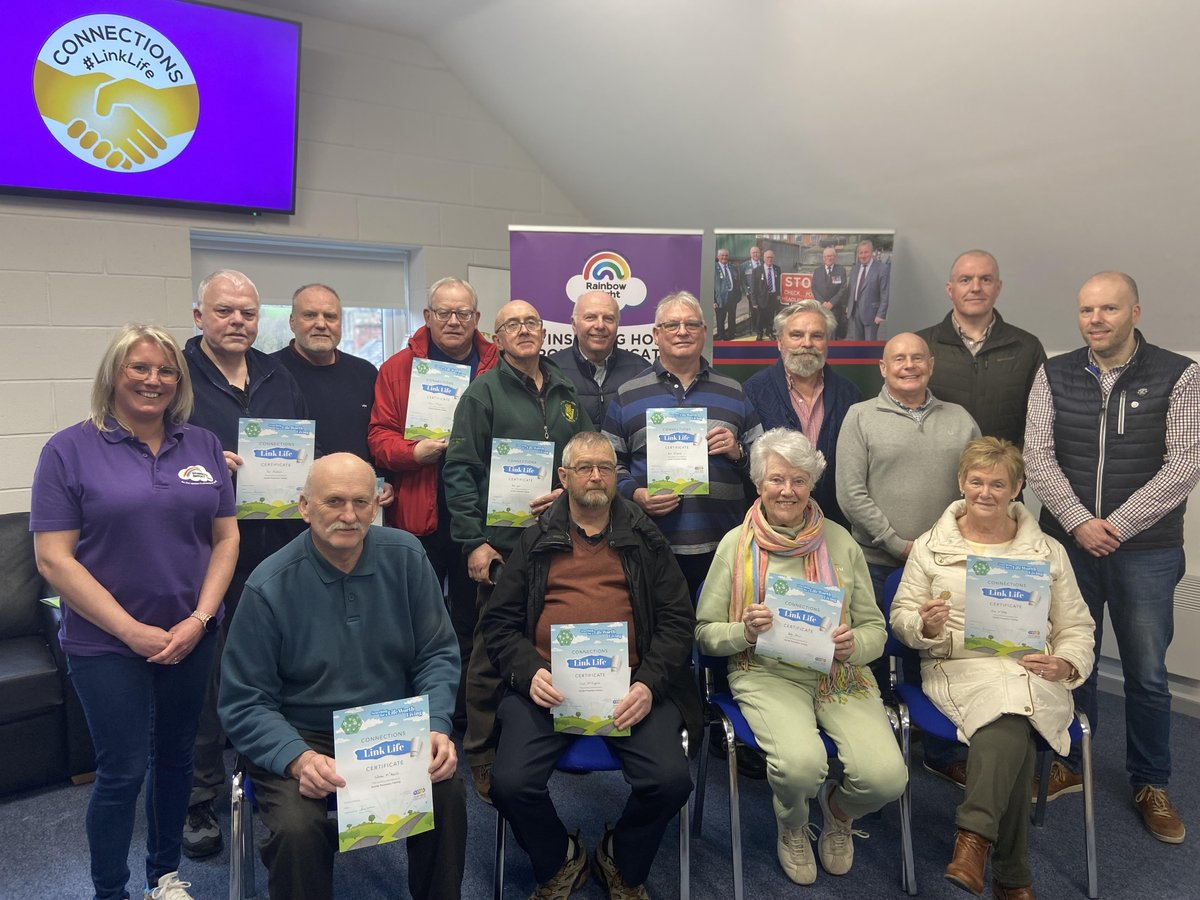
The next training sessions will take place on the following dates:
Tandragee Veterans Centre: Friday 21 April 23
Lisburn Royal British Legion: Friday 19 May 23
Limavady Services Club: Friday 9 June 23
If interested in participating in this training, please contact our office via email: commissioner@nivco.co.uk or Telephone: 07971833160

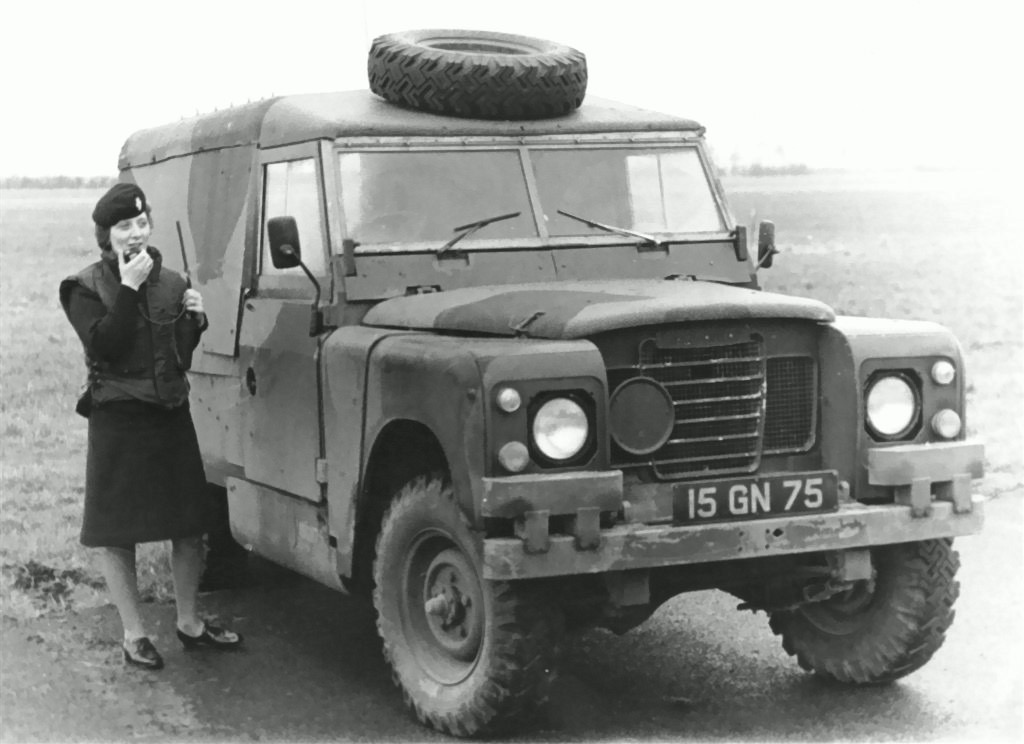
Supporting ‘The Greenfinches’.
NI Veterans Commissioner supports ‘The Greenfinches’.
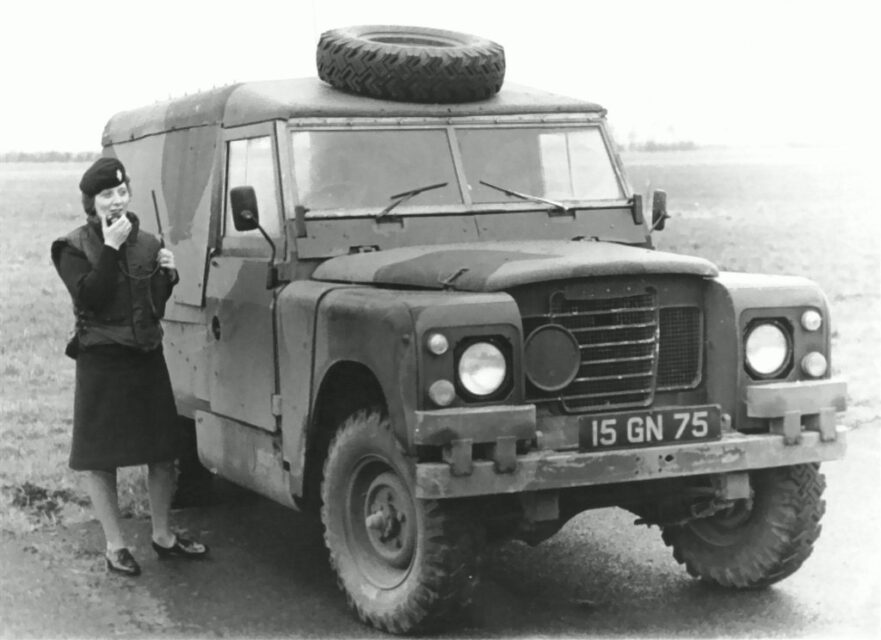
I was disappointed, but unfortunately not surprised, to learn that Sinn Fein representatives on Armagh, Banbridge and Craigavon Borough Council have lodged a ‘call in’ legal challenge to a motion passed by a majority of councillors to pay tribute to the women who served in the the Ulster Defence Regiment, commonly known as the Greenfinches. This summer will mark the 50th anniversary since the first female recruits joined the ranks of the Ulster Defence Regiment. As Veterans Commissioner I will continue to call out this ongoing denigration and demonisation of our Armed Services and veterans, and will call out the misogyny of not recognising the important work of women in our Armed Forces, of which the Greenfinches were instrumental in contributing and expanding the roles available to women in supporting Operations.
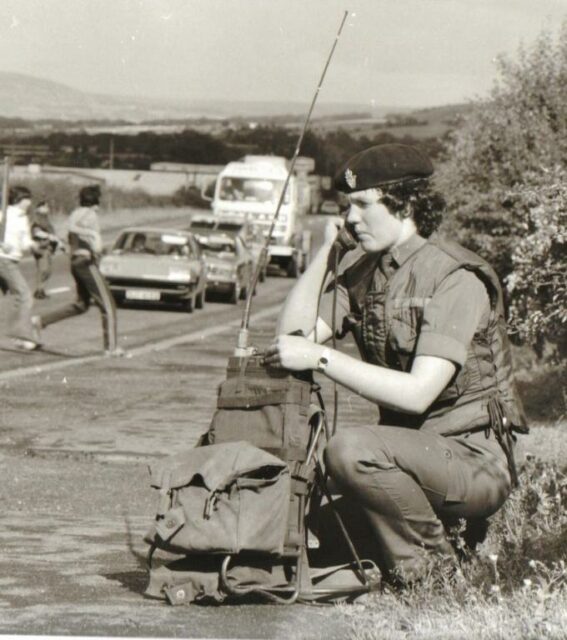
Over the course of 22 years, 60,000 men and women wore the uniform of the Ulster Defence Regiment to help protect innocent civilians against the harm of terrorists that brought chaos and murder to our streets during the Troubles. These brave men and women did so with the understanding that their service placed them at risk every hour of every day – there was no respite on duty or off duty or even after they left the Regiment. Greenfinches were an important, unarmed part of providing this protection and sadly, there is a long Roll of Honour for those members of the Regiment who lost their lives at the hands of terrorism, of which four were Greenfinches. In total, 197 UDR soldiers and Greenfinches were killed both on and off duty, as well as over 60 killed after leaving the Regiment. Over 400 were seriously wounded and many still continue to suffer both psychologically and physically as a result of their service.
The brave men and women who served with the Ulster Defence Regiment, did so with great honour and dignity and stood against terrorism and all its horrors, on behalf of all society. I importantly note how families were impacted by terrorism, needing to check cars for bombs before getting in, and worried incase their loved ones might not return home after their shift. Many unfortunately still bear the pain of losing family members, whether as a member of the security services or indeed families from the innocent civilian population.
In 2006, when Her Majesty, Queen Elizabeth II, came to Belfast to present the Conspicuous Gallantry Cross to the Ulster Defence Regiment she said that the contribution of the Regiment to peace and stability within Northern Ireland had been unique and had required ‘uncommon courage and conviction’. Her Majesty reflected that ‘no challenge faced by the Ulster Defence Regiment went unmet, whatever the personal cost’.
Society should know and have the opportunity to recognise the extraordinary contribution these men and women have already made – and how they continue to do so to the present day.
I will recall one verse from a poem entitled ‘WUDR’, first published in 1983, that aptly summarises who the Greenfinches were:
‘We are the girls of the WUDR, Greenfinches is our common name,
But not one girl in the WUDR, is seeking fame or fortune,
For everyone in the WUDR, is willing to give a helping hand,
To help our country in its fight, and bring peace to our beloved land.’
As the voice for all veterans living in Northern Ireland, I will continue to speak up for them and again I pay tribute to the men and women who served and continue to serve in our Armed Forces, including the former members of the Ulster Defence Regiment CGC, ever remembering those who made the ultimate sacrifice in serving our country. Society owes deep thanks and gratitude to all of our Armed Forces veterans and their service should never be rewritten as anything other than duty and protection against the evils of terrorism.
Danny Kinahan
NI Veterans Commissioner
14 February 2023
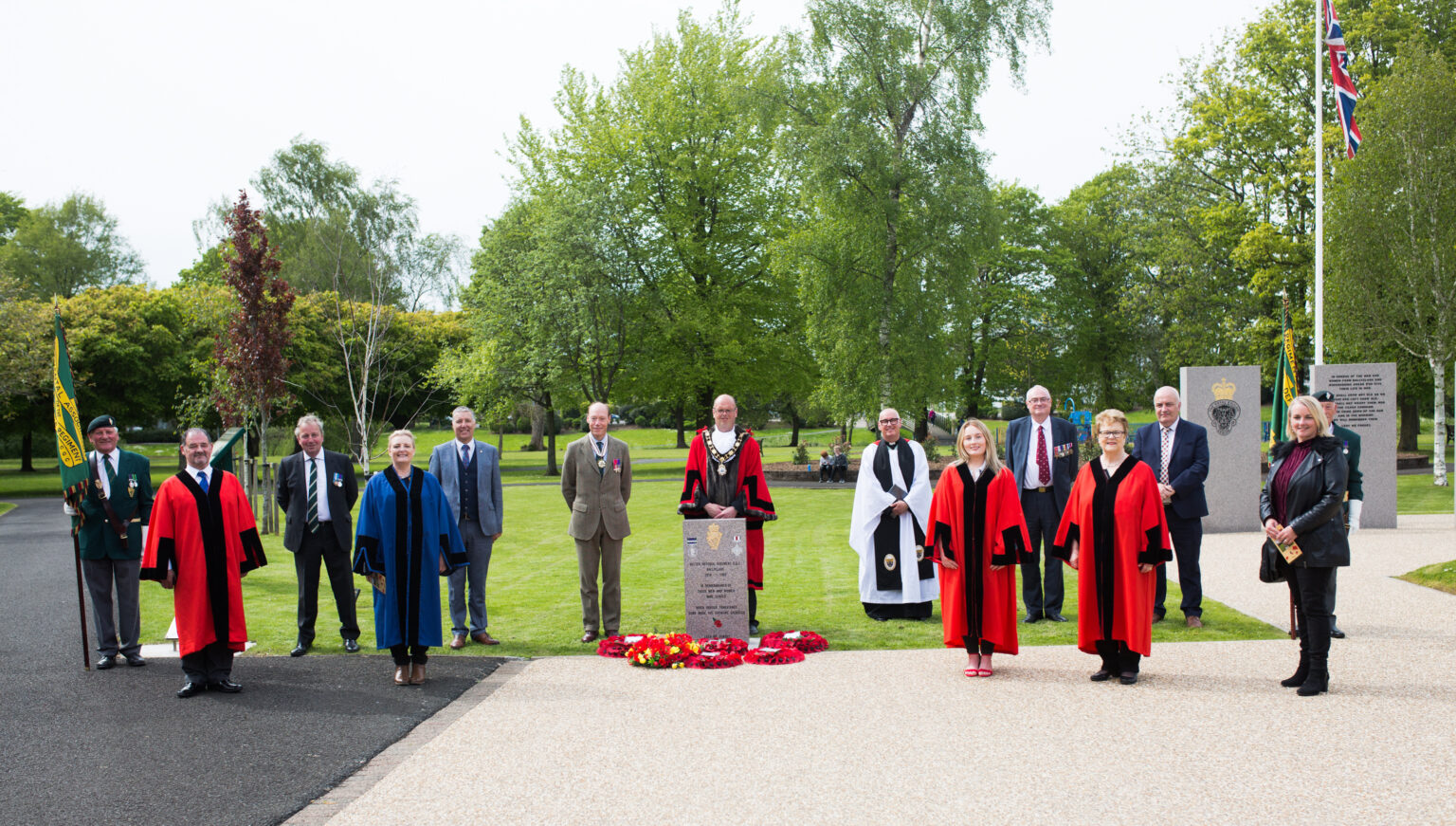
Ballyclare UDR Memorial
Ulster Defence Regiment (UDR) Memorial at Ballyclare War Memorial Park
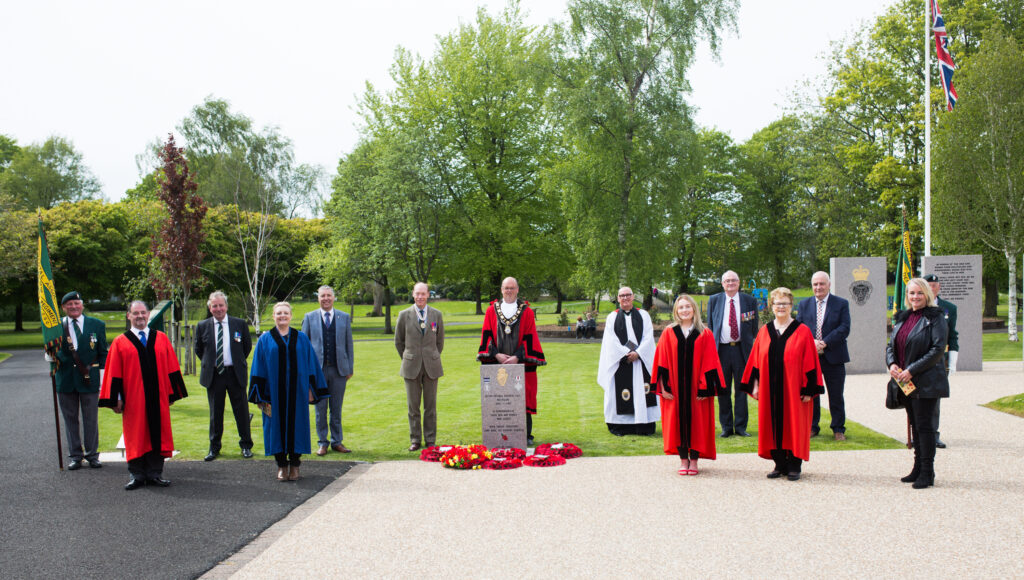
A UDR Memorial was unveiled in a special service of dedication at Ballyclare War Memorial Park on Thursday 27 May. The service, led by Deputy Lieutenant for County Antrim , Mr Edward Montgomery MBE, DL and Mayor of Antrim and Newtownabbey Councillor Jim Montgomery, paid tribute to The Ulster Defence Regiment (UDR), an infantry regiment of the British Army from 1970-1992.
Amongst esteemed guests attending the service was Veterans Commissioner, Danny Kinahan DL, who was instrumental in this memorial. It was as a result of Danny’s motion to the Council in early 2020, whilst serving as an elected Member for Ballyclare and prior to taking up his new role, that the memorial was installed.
The Mayor, Councillor Jim Montgomery said; “It is fitting in the NI Centenary year that we pay tribute to this Northern Irish regiment for their years of service and the efforts they made to keep Northern Ireland safe during turbulent times. In particular, this memorial remembers all those who made the supreme sacrifice and lost their lives in and beyond service”.
Veterans Commissioner Danny Kinahan, DL added; “It is an honour to be present at the unveiling of this memorial to the Ulster Defence Regiment. Having first proposed that a memorial be established in Ballyclare during my time as a Councillor, it is a privilege to be here in my current role as Northern Ireland’s first Veterans Commissioner. It is important that this memorial highlights the tremendous contribution that the men and women of the Ulster Defence Regiment made during its 22 year history”.
In 1992, the UDR was amalgamated with the Royal Irish Rangers to form the Royal Irish Regiment. In 2006, the regiment was retroactively awarded the Conspicuous Gallantry Cross.
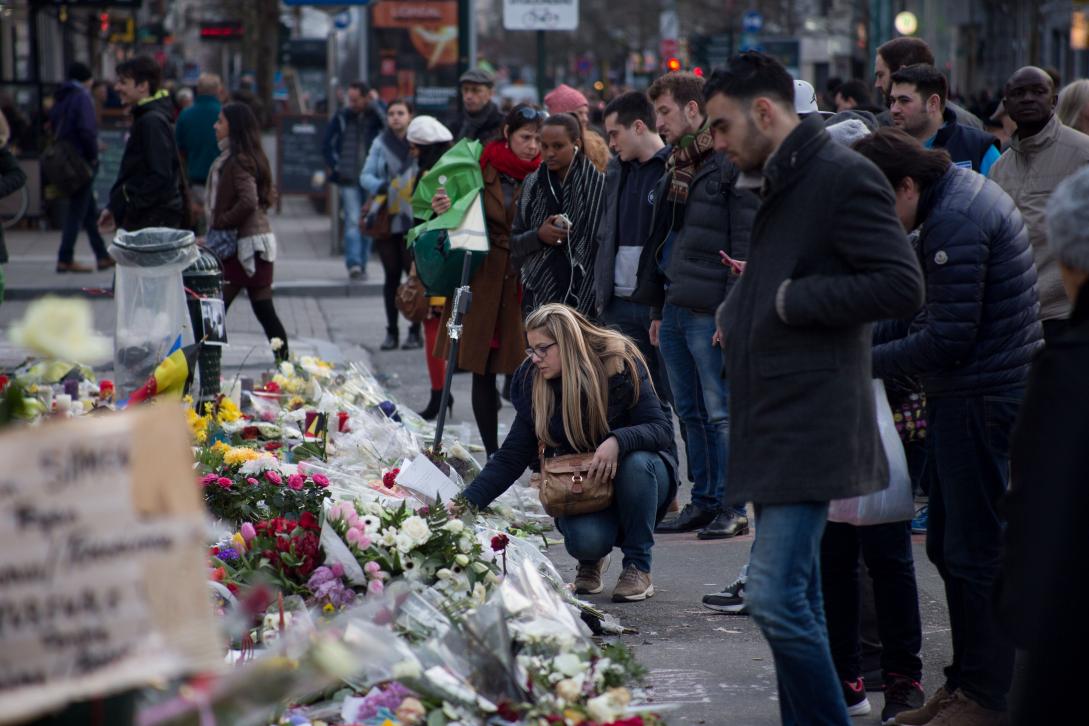
Truth will set Us Free
FAIR has pioneered the concept of Counter-Narratives to Counter Terrorism. This means giving victims a voice and letting them challenge to propaganda and false narratives which are used to radicalise young people and recruit them to support terrorism. By supporting victims to tell their stories we can break the cycle of violence and support for terrorist groups. Terrorism uses a narrative which dehumanises their victims, portraying them as a uniform, or a representative of a state when in reality they are human beings with lives and rights and dreams which are often cruelly ended in the pursuit of a terrorist agenda.
Victims who know the true cost of conflict want to prevent it, and see their stories as the key to countering the false narratives of terrorism. Our truth will set us free from the chains of terrorism and unlock a peaceful future for all. FAIR has always provided a platform for victims to tell their stories, to show the real human face of conflict and the true cost of terrorism. We have worked with victims groups across the globe who share this vision and many important projects have been developed and have built real peace in our time.
The C4C Project, the terrorism survivors’ storytelling, is a global platform for resilience stories and radicalisation awareness. It is a cross national project, supported by the European Commission – DG Home Affairs (ISEC program), started at the beginning of 2013, involving several private, no-profit and public partners, but open to the collaboration of other interested subjects.
The project aim – through ‘The terrorism survivors storytelling’ web platform – is to spread the stories of the victims to the general public and to specific target groups, by collecting, categorizing and giving e-collaborative tools and additional resources for the practical use of these narratives – for example, in educational programs for students and young adults, to empower people with a critical thinking toward hate narratives, or to prevent people from becoming attracted by or permissive towards violent movements, or to de-radicalize people engaged into a radicalisation pathway.
The project is proceeding along three main procedures:
1) The selection, cataloguing, digitization of the materials that contain survivors stories and testimonies, retrieved through the Italian and French associations of victims of terrorism with the availability of other European associations;
2) The design and development of a multilingual platform (The Terrorism Survivors Storytelling) that contains the archive (Global data-base) of the selected materials files. Some of these will be made directly available in their various forms of text, video, photos (Multimedia deposit). That digital material will be used for digital storytelling activity to create new communication/didactic products through the e-collaborative tools, currently on the platform. Furthermore the platform will offer some selected didactic and methodological resources to help its practical usage at the ground floor carried on by practitioners, teachers, tutors for educational/prevention/de-radicalization programs.
3) The enhancement of the strategic value of the C4C project and dissemination of its achieved results during the first two years of its life. A specific target will be a group of students in Italy and France who are going to test the platform and its e-collaborative tools.
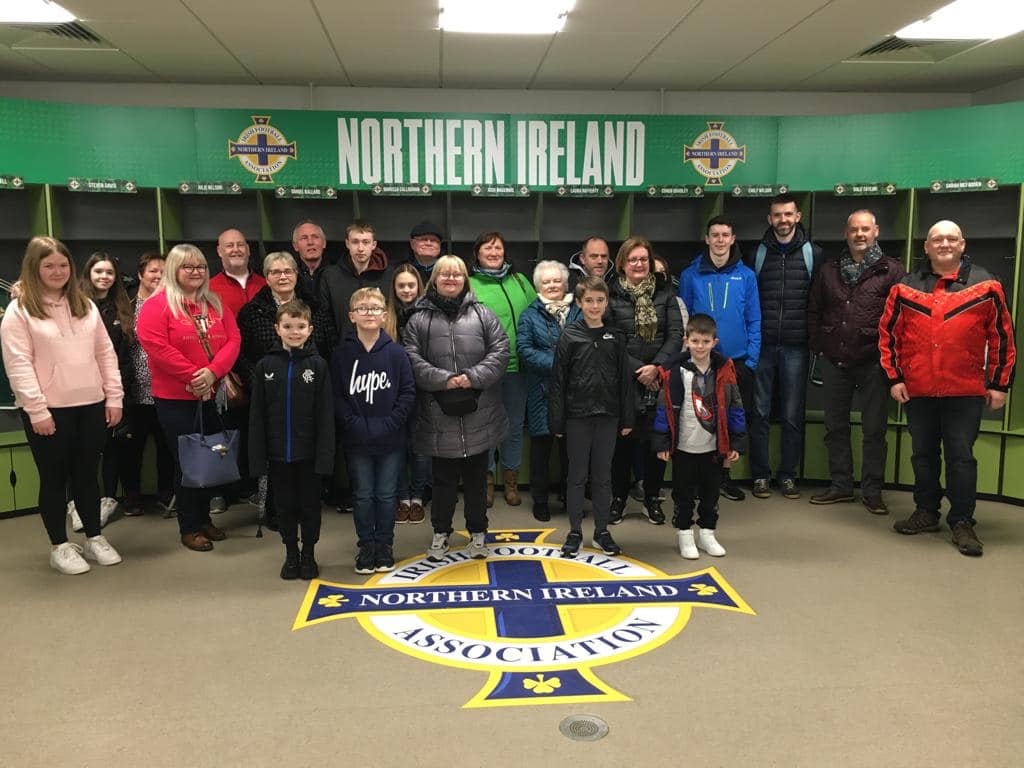
Following the Football
A great night was enjoyed by all ages at the National Stadium - Windsor Park. As off-side rules were explained and famous players of yesteryear debated the group had a real lesson in football. The tour of the grounds and then the match was a real high point for many.
Introduction to Inquests
One important aspect of the support FAIR provides is to families as they engage with the criminal justice system. Sadly many families have never seen justice and for those who do get a taste of it find it a leaves a very bitter taste. The role of FAIR has evolved over the years from taking a leading role in justice and human rights work in many pivotal cases to today providing the support and care to those who seek justice. Behind the headlines we deal with the heartache and with the practical support and care needed to equip victims to engage with the criminal justice system. They have often waited decades and the process they encounter can often re-traumatise them. Weeks of attendance at court, the disclosure of painful details around the murder of their loved ones and the frustration of seeing those responsible often escape justice takes it toll.
Our work is often behind the scenes, preparing victims and families for this process, managing their expectations and giving them a listening ear and a range of support as they proceed. The first step for many is to engage with the Police or other legacy investigative processes. Then a Coroners Court will hold an Inquest. An inquest is an inquiry into the circumstances of a death. The purpose of the inquest is to find out who the deceased person was and how, when and where they died and to provide the details needed for their death to be registered. It is not a trial. It is not for the Coroner to decide, or appear to decide, any question of criminal or civil liability or to apportion guilt or attribute blame.
The average time families have waited for a conclusion to adjourned inquests is 20 years and seven months. Many of the reopened inquests waiting to be heard concern deaths that occcurred as far back as 1971. The majority of the cases have not led to prosecutions. Many inquests were opened shortly after the deaths happened but were adjourned and never concluded, while half were reopened in recent years on the orders of John Larkin QC, the then attorney general of Northern Ireland, following complaints that the original hearings were fundamentally unfair.
In February 2019 the Lord Chief Justice, Sir Declan Morgan, issued the following statement in response to the announcement by the Department of Justice that funding is to be made available for legacy inquests commencing in April 2019:
“On 12 February 2016 I proposed a plan for dealing with what have now come to be known as the “legacy inquests”. Legacy inquests have an impact on bereaved families, those who have served in the police and armed forces, other state agencies; and very often the wider communities in which these deaths occurred.
I am pleased that funding is now going to be provided to implement the plan for dealing with legacy inquests which I proposed over three years ago. There is clearly a great deal of preparatory work to be done to establish the Legacy Inquest Unit and deliver my plan. During this preparatory period, it will be important to engage with all the relevant agencies and parties who will have to play their part in ensuring that the outstanding inquests can be completed within a five year period once the unit has been established.
While the preparations for the Legacy Inquest Unit are ongoing, I expect that there will be a further Judge-led review to follow up on the work undertaken by Lord Justice Weir when he carried out a comprehensive review of these cases in February 2016. We anticipate this review will be completed before the summer recess.”
Sadly progress has been slow and the entire process has become politicised. In the case of the Kingsmills Inquest families has been continually denied access to information and have lost faith in the process. This experience has caused more suffering and during it many victims have passed away before they can see the truth established. Through all of this FAIR has provided support and care giving victims the strength to continue.
One of our important roles is to provide information to victims and families as they engage in the criminal justice system. That ranges from basis advice and orientation about what they can expect through to complex legal advice and support. Often an explanation of what an Inquest is will help manage expectations and avoid disappointment. A sample of the information we provide is included below.
Inquests
An inquest is an inquiry into the circumstances surrounding a death. The purpose of the inquest is to find out who the person was and how, when and where they died, and to find out the details the Registrar of Deaths need to register the death.
An inquest is not a trial. It is not the role of the Coroner to decide any question of criminal or civil liability or to apportion guilt or attribute blame.
Once the Coroner’s investigation into a death is complete, the Coroner will decide if an inquest is to be held. This can take some time to complete and is dependent on the circumstances of the death and the final report of the postmortem examination.
If the Coroner is informed that someone has been charged with an offence directly linked to the death, the inquest or a decision on whether to hold and inquest, will not be made until the criminal proceedings end.
If an inquest is to be held a date will be arranged in consultation with the family. Inquests are open to the public and the media.
Coroners decide who should give evidence as witnesses at an inquest. Witnesses will first be questioned by the Coroner, and there may be further questions by ‘properly interested people’ or their legal representatives. Person’s with a ‘proper interest’ include:
- relatives of the deceased
- the executor(s) of the deceased’s will or a person appointed as the deceased’s personal representative
- solicitors acting for the next of kin
- insurers with a relevant interest
- anyone who may, in some way, be responsible for the death
- others at some special risk or appearing to the Coroner to have a proper interest
The findings of an inquest will record the essential facts about the means by which the deceased came by his or her death.
Coroners Inquest (PDF) - Northern Ireland Court Service Online
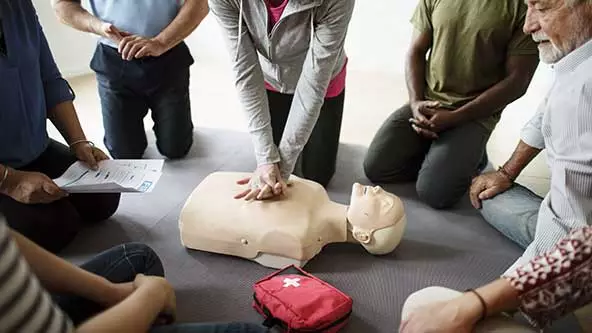
FAIR First Aid
First Aid Courses are an important part of FAIR’s yearly calendar, providing useful training for people from all types of workplaces. It is useful for employees, employers, young people and parents and is a must for everyone in the community, as you never know when you will need it.
FAIR hopes to run a number of these courses on demand, so speak to one of the team today to find out the next opportunity and book early to ensure your place.
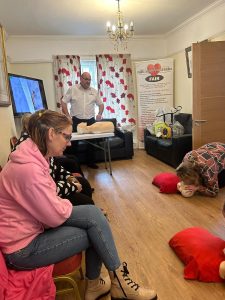
FAIR have just been able to purchase a Defibrillator through funding by ABC council and 9 members received First Aid training on Monday 20th March. This is a very important piece of equipment and saves lives. It will be placed at Mount Pleasant House , 18 Mowhan Road at their premises where they are able to hold large gatherings during the summer and even during winter evenings.
Living Memorial Centre Development
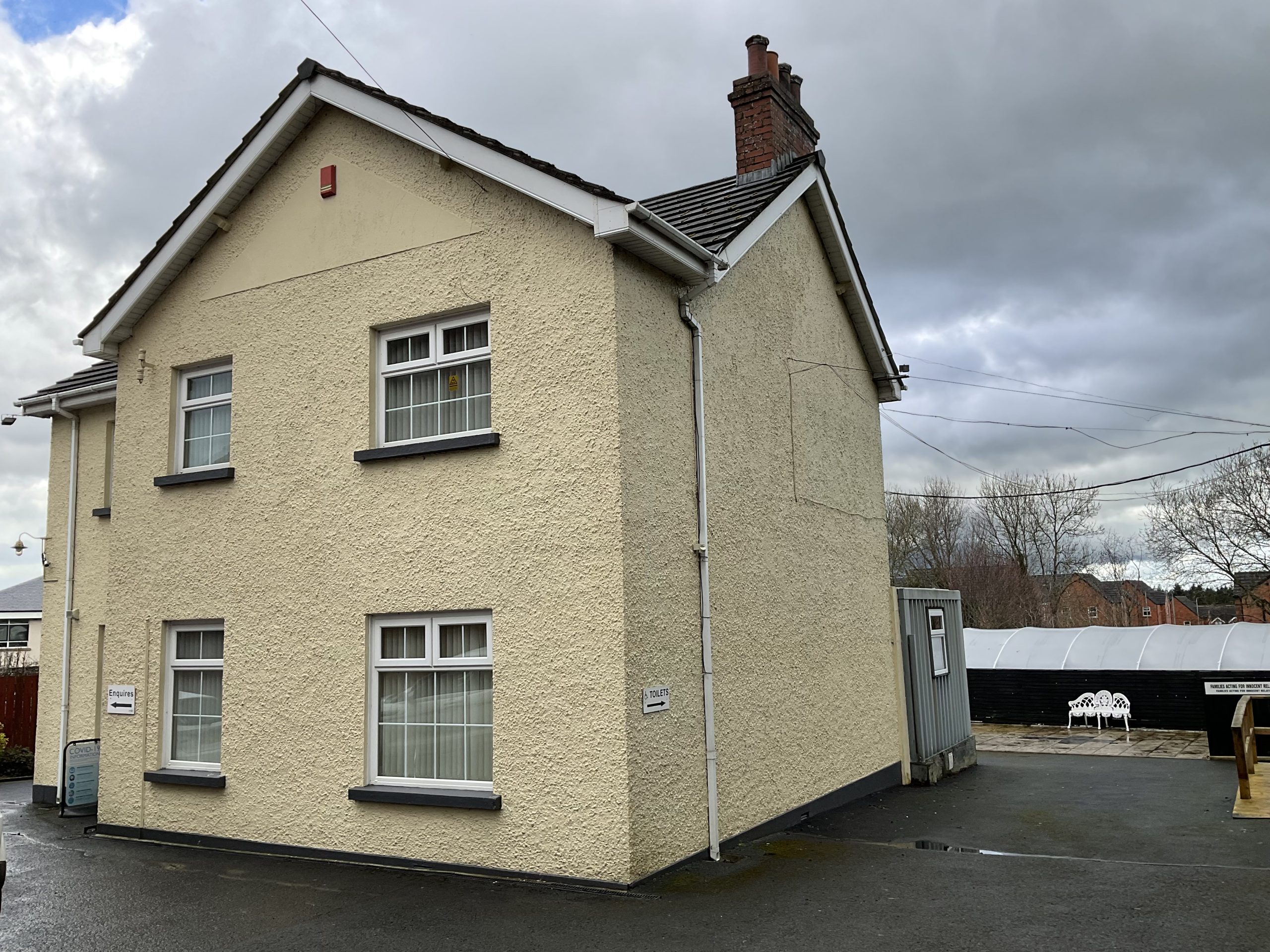
AS FAIR marks its 25th Anniversary they have launched an exciting new Living Memorial Centre Development project. Over 15 years ago the group secured premises in Markethill. In what was the school masters house the group developed the first phase of their Living Memorial centre with a reception and administrative hub, meeting room and multi-purpose space, with kitchen. On the first floor an IT suite, and officers were developed. A memorial garden with a marble memorial funded and designed by friends and supporters on the mainland became the centrepiece with a place for victims to reflect and remember.

The group quickly outgrew the building and as new projects and activities were launched a number of temporary offices were placed on site. Over the last decade the group continued to develop the main building with an extended kitchen and disabled access toilets and storage. However as FAIR looked to its first quarter century one of the key priorities was a major development project to modernise and make their centre fit for the future. As members views were canvassed and professional advice Slough the project took shape with a range of new facilities and multiple-purpose spaces envisaged.
Meetings have already begun with the design team and the committee is turning its attention to fundraising. The ambitious target of £250,000 has been set - £10,000 for every year that FAIR has been in existence. The vision for the centre as a 'living memorial' remains strong and guides the group. It see the centre as a place of safety and support. FAIR has developed their facility at Mount Pleasant House as
An accessible, safe, friendly supportive and well resourced facility where victims can—
-
Remember loved ones they have lost as a result of the past thirty years of terrorism.
-
Meet and share within a social setting where they can share their experiences
-
Access professional services to help them deal with their physical and mental trauma,
-
Develop the skills, confidence and capacity needed to move on with their lives,
-
Receive the support, advocacy and care they deserve from the group they created
-
Deal with the Past and provide their interpretation of it in a positive way
-
Reintegrate into the community forming practical partnerships that benefit all
-
Become a valued group in society playing a full role in building lasting, genuine peace


Learning to Save Lives
As part of the wider training and health & well being work of the group we have invested in equipment and training which will save lives. FAIR has a heart not just for victims but the wider community and our defibrillator and training will provide life saving services to the whole community.
FAIR have just been able to purchase a Defibrillator through funding by ABC council and 9 members received First Aid training on Monday 20th March. This is a very important piece of equipment and saves lives. It will be placed at Mount Pleasant House , 18 Mowhan Road at their premises where they are able to hold large gatherings during the summer and even during winter evenings.
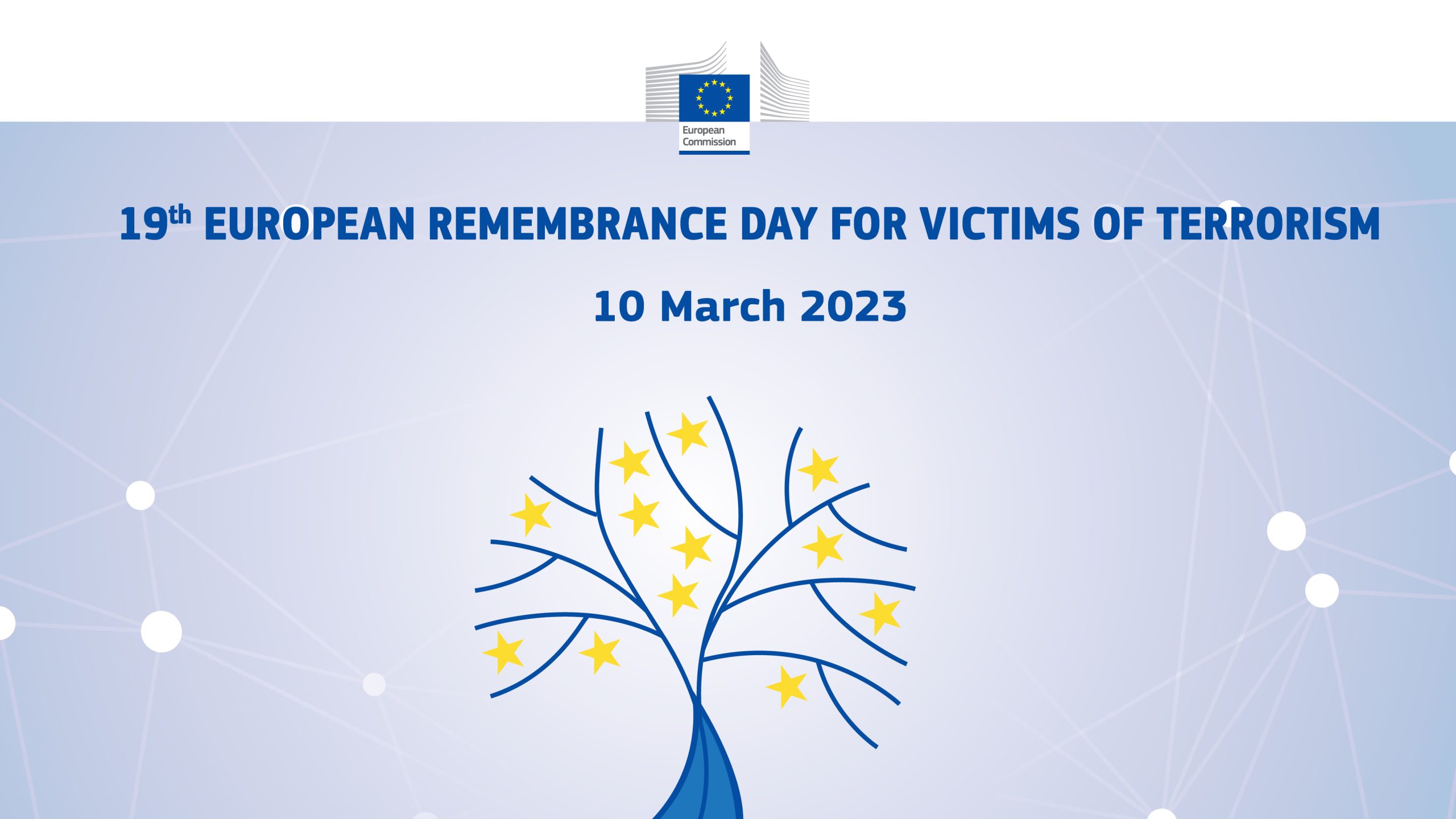
European Memorial Day for Victims of Terrorism 2023
United in Remembrance: FAIR Group Attends European Memorial Day for Victims of Terrorism in Belfast
Introduction: In a poignant and heartfelt gathering, the FAIR Group is set to attend the European Memorial Day for Victims of Terrorism at the historic La Mon Hotel in Belfast. As we come together to remember and honor those who have suffered the profound impacts of terrorism, this event stands as a symbol of solidarity, resilience, and the enduring pursuit of justice. The La Mon Hotel, echoing with the shared stories of survival and loss, becomes a space for remembrance and a testament to the strength of those who have faced the harsh realities of terrorism.
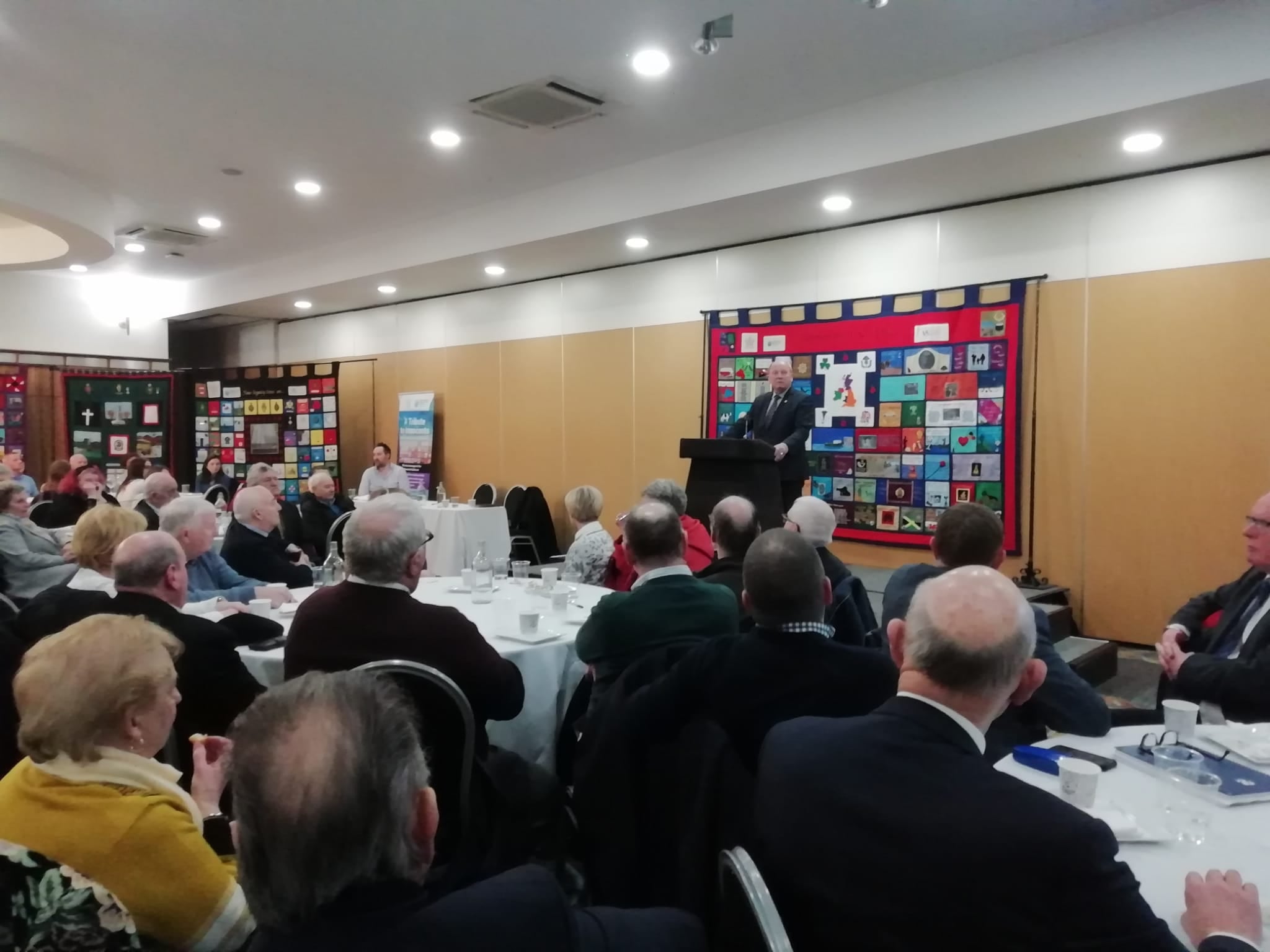
A Gathering of Compassion: The European Memorial Day for Victims of Terrorism is a significant occasion that unites people from all walks of life, transcending borders and cultures. This year, the FAIR Group is proud to stand among those who share a common commitment to acknowledging the pain and hardship experienced by victims of terrorism throughout Europe.
As attendees gather at the La Mon Hotel, there is a shared understanding that the impact of terrorism is profound and far-reaching. The event is not just a memorial but a powerful demonstration of solidarity, a coming together of survivors, families, and advocates to collectively address the challenges faced by those affected.
La Mon Hotel: A Symbolic Venue: The choice of the La Mon Hotel as the venue for this significant event adds a layer of historical significance. The hotel, which itself experienced a tragic bombing in 1978, serves as a powerful reminder of the devastating consequences of terrorism. The scars of that event are still visible, making it a poignant location for the FAIR Group and others to pay their respects and reflect on the broader impact of terrorism on individuals and communities.
Honoring the Stories of Resilience: Throughout the day, attendees will have the opportunity to share their stories, experiences, and memories. The FAIR Group, with its commitment to fairness, accountability, integrity, and respect, brings a unique perspective to the event. Members will not only stand in solidarity with victims but also contribute to the ongoing dialogue about the importance of supporting those affected by acts of terrorism.
Speeches, testimonials, and moments of reflection will weave together a narrative of resilience, emphasizing the strength and courage of survivors. By participating in this collective remembrance, the FAIR Group aims to amplify the voices of those who often go unheard and foster a deeper understanding of the long-lasting effects of terrorism.
A Call to Action: As the day unfolds, it is not just a time for reflection but also a call to action. The FAIR Group, alongside other attendees, will renew their commitment to advocating for policies that prioritize the needs of victims and promote a society free from the specter of terrorism. By standing together, we affirm our shared responsibility to work towards preventing future tragedies and creating a world where no one has to endure the pain caused by acts of terror.
Conclusion: The European Memorial Day for Victims of Terrorism at the La Mon Hotel is not just an event; it is a testament to the strength of the human spirit. As the FAIR Group participates in this solemn gathering, we are reminded that through unity and compassion, we can build a future where the shadows of terrorism are replaced with the light of justice, empathy, and resilience. May this day serve as a catalyst for positive change and a beacon of hope for all those impacted by acts of terrorism across Europe.